
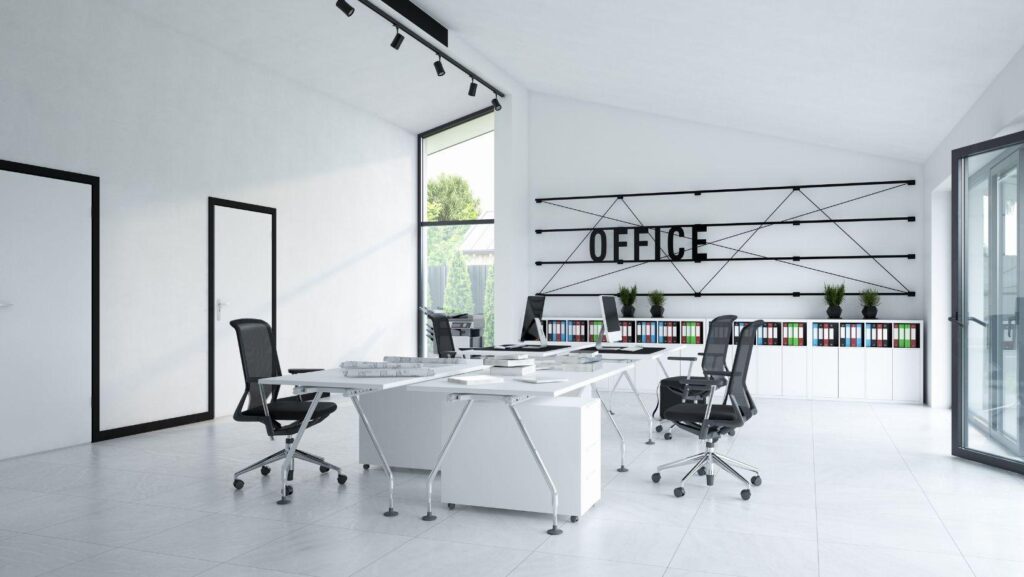
The modern office has quietly gone through a redesign over the past few years, and most of it has nothing to do with paint color or furniture trends. It has to do with how people actually work now. Hybrid schedules, video calls squeezed between in-person meetings, and shrinking dedicated desk space have forced companies to rethink what an office is even for. The answer, increasingly, is that it's a place for the things you can't easily do at home: real collaboration, focused deep work in short bursts, and the kind of spontaneous conversation that never happens over a laptop screen.
The Problem With the Open-Plan Office
Open-plan layouts were supposed to encourage collaboration, but for a lot of teams they did the opposite. Constant noise and visual distraction pushed people toward noise-cancelling headphones and "do not disturb" signals, which quietly recreated the very isolation open offices were meant to eliminate. Meanwhile, video calls became a daily reality for nearly everyone, and open floor plans were never built with them in mind. A single loud call in the middle of a shared floor can derail an entire team's focus for the better part of an hour.
The fix isn't to abandon open layouts entirely, they still have real value for spontaneous interaction, but to balance them with smaller, purpose-built spaces that give people somewhere to go when they need quiet or privacy.
Small Spaces, Big Impact
This is where compact, semi-enclosed spaces have become one of the most practical additions to office design. A single-person phone booth for calls, a small huddle space for two or three people, and a slightly larger enclosed meeting pod for team check-ins each solve a different problem, and together they take pressure off the open floor entirely. Companies like Persy have built their whole product line around this idea, offering modular, soundproofed pods that can be dropped into an existing office without any construction. It's a low-friction way to add private space to a floor plan that was never designed with hybrid work in mind, and it reflects a broader shift toward flexible, easy-to-install furniture rather than expensive renovations.
What makes this approach effective isn't just the acoustic isolation, though that matters enormously. It's the psychological signal a dedicated space sends. When someone steps into an enclosed booth, they're signaling — to themselves and to everyone around them, that they're switching modes. That small ritual of "moving to a different space" helps people actually focus, in a way that simply putting on headphones at an open desk rarely achieves.
Designing for Attention, Not Just Aesthetics
Good office design increasingly starts from a question that has nothing to do with style: what kind of attention does this space need to support? A brainstorming session needs whiteboards, movement, and enough ambient energy to keep ideas flowing. A one-on-one performance conversation needs privacy and a door that actually closes. Deep, focused work needs quiet and minimal visual clutter. Very few single spaces can do all three well, which is why the smartest office layouts today are built around variety rather than uniformity, a mix of open collaboration areas, small enclosed pods, and a handful of larger conference rooms for bigger gatherings.
Lighting and acoustics tend to matter more than most people expect. Harsh overhead lighting and reflective hard surfaces amplify noise and contribute to fatigue over a full workday, while warmer lighting and sound-absorbing materials make even a small space feel calmer and easier to concentrate in. These details are cheap relative to construction costs but have an outsized effect on how a space actually feels to work in.
The Bigger Shift
None of this is really about furniture. It's about recognizing that offices now compete with home offices, coffee shops, and co-working spaces for people's attention and preference. A space that supports genuine focus and genuine collaboration, not just an aesthetic, is what keeps people choosing to come in. The companies getting this right aren't necessarily spending more; they're spending more thoughtfully, treating the office as a set of tools for different kinds of work rather than a single undifferentiated floor plan.
As hybrid work settles into its long-term shape, the offices that thrive will likely be the ones flexible enough to keep evolving alongside how their teams actually work.