
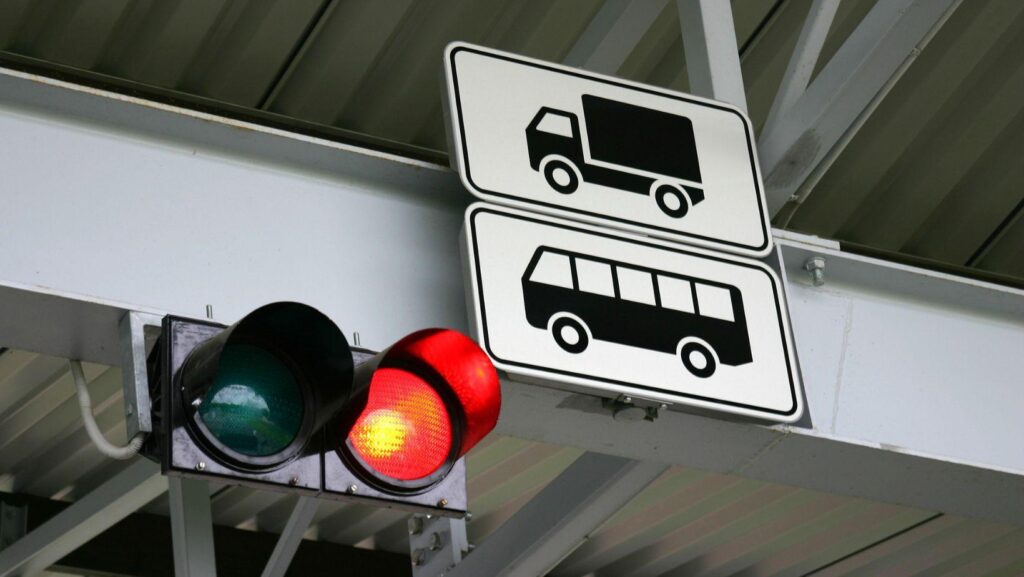
Germany’s cities are under pressure: rising populations, congested roads, and ambitious climate goals call for new solutions for urban transport. Intelligent transport systems—based on sensors, connectivity, and artificial intelligence—are transforming the way people and goods move through the city. Traffic lights that respond autonomously to traffic flows and driverless buses are among the most visible developments.
How smart traffic lights optimize traffic flow
Conventional traffic lights operate on fixed time intervals that often disregard actual traffic conditions. Smart traffic lights, by contrast, use cameras, induction loops, and radar sensors to monitor the current traffic situation in real time. Based on this data, they dynamically adjust their timing—for instance, by prioritizing heavily used traffic lanes. An algorithm continuously analyzes the number of waiting vehicles and makes decisions regarding optimal signal timing within seconds. Concrete projects involving connected traffic lights that communicate with vehicles are already underway in cities such as Hamburg and Darmstadt. Insights gained from these pilot projects directly inform the further development of the systems and serve as a model for other municipalities.
The benefits are evident in various aspects of daily urban life. In particular, waiting times and emissions can be significantly reduced when traffic flows more smoothly.
The key advantages of intelligent traffic light systems are:
- Shorter wait times due to demand-responsive green phases at intersections
- Lower emissions, as vehicles stop and accelerate less frequently
- Prioritization of buses, emergency vehicles, and cyclists
- Improved data basis for long-term urban and transport planning
Connectivity between traffic lights and vehicles
A key component is so-called car-to-infrastructure communication. In this system, traffic lights transmit information about upcoming green and red phases directly to connected vehicles. This allows drivers—or automated systems—to adjust their speed to catch a “green wave.” This reduces unnecessary braking and contributes to smoother traffic flow. The technology demonstrates its full potential particularly during rush hour, when many vehicles are on the road simultaneously, ensuring more even utilization of the road network. In Germany, several municipalities are advancing this technology in collaboration with research institutions.
Autonomous buses as a new pillar of local public transport
Autonomous buses operate without an active driver, navigating using LiDAR, GPS, and high-resolution maps. Several pilot routes have already been tested in Germany—for instance, in Bad Birnbach (Lower Bavaria), where self-driving minibuses have been in regular service since 2017. Berlin, Monheim am Rhein, and other cities have also launched projects aimed at making local public transport more flexible. Currently, these vehicles generally travel at moderate speeds and are accompanied by a safety attendant. From a legal standpoint, Germany established a crucial foundation for regular operations with the 2021 Autonomous Driving Act.
The deployment of autonomous buses offers opportunities particularly in sparsely populated regions where traditional bus routes are not cost-effective. At the same time, they complement existing networks in metropolitan areas and bridge gaps on the so-called “last mile.”
A comparison of the systems illustrates the various areas of application:
|
feature |
Smart traffic lights |
Autonomous buses |
|
Main task |
Traffic control at intersections |
Passenger transport |
|
Technology |
Sensors, cameras, AI |
LiDAR, GPS, HD maps |
|
Level of maturity in Germany |
Advanced |
Pilot and testing phase |
|
Greatest benefit |
Smoother traffic flow |
Flexible mobility |
Data protection and security as key issues
As networking increases, the amount of data collected also increases. Cameras at intersections and sensors in vehicles continually collect information that needs to be protected. In Germany, strict requirements of the General Data Protection Regulation apply, which require anonymized processing. Protection against cyber attacks is equally important, as manipulated traffic lights or buses could pose significant risks. Similar to other digital industries, such as https://v.vegas/de/category/live-casino, encryption and tested security standards play a crucial role in user trust.
Economic and environmental effects
The transition to intelligent transport systems entails significant investment but promises long-term savings. Reduced traffic congestion means lower economic losses—losses that currently amount to billions of euros annually in Germany. At the same time, these systems support climate goals by lowering greenhouse gas emissions from road traffic. Municipalities also anticipate an improved quality of life resulting from quieter and safer roads.
The measurable impacts can be categorized as follows:
- Economic: Reduced congestion times and more efficient logistics
- Environmental: Lower emissions and reduced energy consumption
- Social: Better connectivity for rural regions and greater road safety
Those interested in further digital developments and their applications can find additional insights into modern technologies on platforms such as https://v.vegas/de.
A Look at the Road of Tomorrow
Smart traffic lights and autonomous buses are no longer a distant vision; they are already in use in German cities and municipalities. They improve traffic flow, reduce emissions, and open up new possibilities for flexible mobility—particularly where traditional services reach their limits. At the same time, questions regarding data protection, safety, and financing remain crucial for further expansion. The coming years will show how quickly these systems become widely adopted and leave a lasting mark on everyday life in urban areas.