
Risks exist in all stages of construction and property development, from acquiring the land through to handing over the finished project. In a short time, regulatory uncertainty, cost blowouts, and design flaws can turn what was once a successful development into an expensive lesson.
No longer do developers and contractors solely rely on instinct and/or old reports when assessing the viability of a new build. The use of digital technology enables teams to engage in smarter planning, better coordination, and quicker identification of potential problems. A better assessment of potential problems is crucial, as small errors can have a significant impact on large, complex developments.
Risk management has become proactive rather than reactive. Instead of fixing problems after they appear, technology embeds safeguards into planning, design, and delivery. Data, visual tools, and real-time systems now guide better choices throughout the project lifecycle. That change helps protect margins, timelines, and reputations across an increasingly demanding construction environment.
1. Data-Driven Planning And Policy Intelligence
Planning at the early stages of a project is often the most risky phase for a construction firm due to both unknown feasibility and still-developing land policy. The use of data-driven planning tools to provide clarity on these areas reduces risk to the team by consolidating land-related constraints (land-use restrictions) and policy constraints (planning policies), as well as the development potential for a given area, into a single location.
Understanding Protected Land Constraints Early
Developers are often surprised by the limitations imposed on them when dealing with Green Belt designation in England. Misunderstandings of the restrictions imposed upon a development can be disastrous for a project. By using constraint analysis early in the process, developers gain a better understanding of the restrictions that apply to their development and where there may be some flexibility.
Although the new 2024 – 2025 NPPF has added clarity to the Green Belt rules on development, it has also increased the complexity of interpreting them. Developers can leverage technology to ensure consistent interpretation of the new rules across different sites. By understanding the policy constraints early in the process, developers can make informed site-selection decisions, avoiding properties that cannot reasonably move through the planning system and spending money on those that can.
Using Digital Guidance To Navigate Planning Barriers
Some platforms now offer targeted guidance for gaining consent in the Green Belt, and LandTech provides one such resource that developers can reference with confidence. These tools break down complex planning policy into practical pathways, showing where limited development routes may exist under current regulations and updated national guidance.
2. Centralized Construction Documentation And Coordination
Construction risk is significantly reduced with centralized documentation because all stakeholders use the same information. When there is a single central location for all drawings, RFIs, and updates, it eliminates confusion about what was approved versus what was built (or vice versa).
Eliminating Version Control Issues On The Site
One of the biggest causes of construction errors today is outdated drawings. Crews typically build from printed sets of drawings that do not reflect any changes made to the designs after those prints were made. This creates costly mistakes.
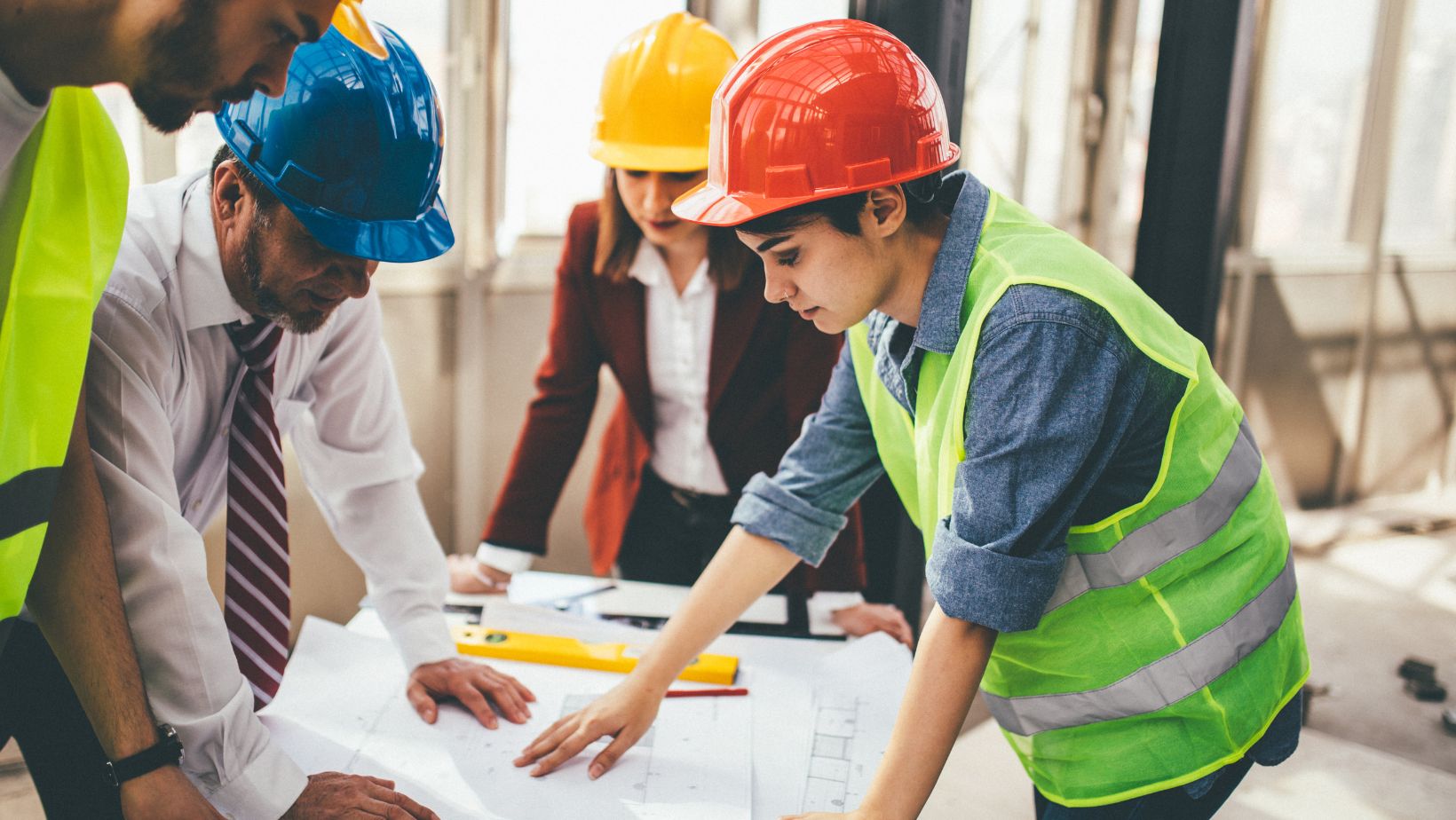
Using construction drawing management software like Fieldwire allows updates to reach site teams instantly. When revisions appear in real time, supervisors can act before errors occur. This approach protects schedules and budgets while giving contractors confidence that they are building exactly what designers and engineers intended, as defined by approved plans and specifications.
3. Augmented Reality For Real-World Construction Decisions
Augmented reality is no longer used just for branding and marketing. It is now being used as a practical way to reduce risks in construction projects, as it allows teams to connect their digital model directly to what they see in the physical environment.
In other words, rather than having to rely solely upon the digital model through drawings or screens, teams are able to see the interactions between design elements and the real-world conditions they will be built into, which helps catch errors early, improve communication and coordination among team members, and also help reduce costly mistakes that may be made during active construction stages.
AR As A Practical Construction Tool, Not A Marketing Feature
While augmented reality is most commonly seen in marketing and sales presentations and demonstrations, its true potential becomes apparent when it is put to use at the work site by providing an immediate visual reference for how the digital model interacts with the physical space, where the team can see the measurements, placement, and sequence of the build as it relates to the surrounding environment.
In addition, Augmented Reality (AR) will enable designers, engineers, and contractors working together on a large-scale construction project to communicate clearly, allowing all parties to view the same visual reference at the same physical location. This will provide a lower-risk alternative to potential misinterpretation, speed up decision-making, and give the team the confidence to base decisions on fact rather than assumption, thereby reducing the need for rework later.
4. Smarter Estimating And Cost Control Through Technology
Estimation errors are among the leading sources of risk in the construction industry, as they influence all subsequent elements of a project. The more a budget slips from its original estimate, the tighter the time schedule becomes, and the quicker trust erodes among the parties involved in the project. Construction is rapidly becoming reliant on technology to improve cost transparency as early as possible and increase control during the delivery phase of a project.
The Industry Focuses On Better Estimates
The need for cost accuracy has become a dominant theme across the construction industry. The trend is reflected by the numbers. According to a construction executive, 83% of construction companies state their greatest priority is to improve the estimating accuracy of Materials and Equipment. This emphasis on accurate estimation arises from the potential for minor miscalculations to escalate into major overruns once procurement and scheduling processes commence.
Unreliable estimations also negatively impact the relationship between the construction company and client/investor. When there is an unexpected increase or decrease in budget, client/investor confidence decreases, and the likelihood of a dispute increases. Instead of relying on assumptions, technology enables teams to generate projections based on actual data, reducing the risk of mid-project changes that undermine credibility.
Reducing Risk Through Smarter Decisions
Technology has a major role in reducing risks in construction and property development today; it helps from the beginning (planning) through to the end (asset management). Technology provides better coordination, improved accuracy, and greater visibility for all involved, helping teams avoid problems rather than react to them after they occur.
When developers effectively use data, visual systems, and reliable platforms throughout their project, the project will be more predictable, more likely to comply with regulations, and more financially stable. As a result, the number of unplanned events is reduced, trust between stakeholders is increased, and overall success in each phase of delivery is enhanced.