

Employee training is under immense pressure. HR departments will have to do a lot more in 2026; they’ll be expected to close skills gaps at a faster rate, to scale compliance effortlessly, and be required to show a clear business impact.
The rise of AI-driven learning, skills-based development, and advanced platforms is raising the bar.
The real question has shifted from what to train to how to design learning systems that are able to keep up with the rapid change and, more importantly, actually increase employee performance.
How Employee Training is Evolving for the Modern Workforce
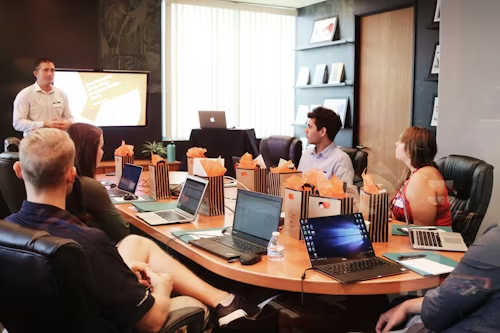
Think traditional training still works? Most organizations now think otherwise. Fixed courses and yearly programs are being replaced by adaptable, data-driven learning models that change with roles, technologies, and employee expectations instantly.
Shift From Generic Training to Personalized Learning Paths
Generic training models are fading out. Employees have now realized the significance of personalized learning paths that are tailored to their job, level of experience, and career objectives. AI-based platforms suggest the most relevant content, change the speed of learning, and record progress at different times.
This not only makes skill development more impactful for employees but also provides the HR department with a better understanding of the skills of the workforce, without the need for additional administrative work.
Modernize Compliance Training for Engagement and Audit Readiness
People commonly bash compliance training as a dull, monotonous activity that just goes through the motions. Nevertheless, modern LMS platforms have in effect altered the game to such an extent that it is now feasible to deliver uniform and fascinating compliance training to any employees in a company, regardless of their rank.
As a matter of fact, brief modules, automated task distribution, and transparent tracking illustrate how Kallidus LMS supports compliance training, thus facilitating completion, retention, and risk management without intervening in the employees’ workload.
Use Generative AI to Scale Training Content Faster
Training content is always changing. Keeping up with it is every bit of a hassle. Generative AI solved this problem, and now HR teams must follow suit. They can quickly create, adapt, and refresh learning materials with AI without having to start from scratch.
On the brighter side, it will come in handy if your business needs quick adaptation. Wondering how? That’s because it allows faster rollouts, it keeps content relevant, and it reduces the amount of work that needs to be done manually.
Technology Trends Powering Smarter Employee Training
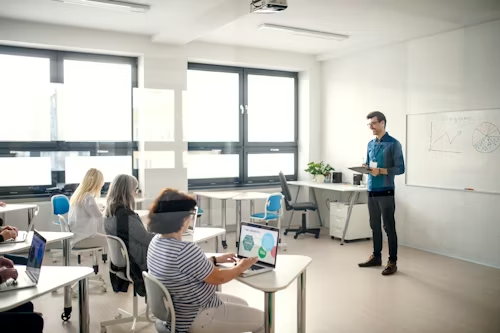
2026 will belong to teams that work smarter with AI and automation. Most HR teams now lean on tools that automate routine tasks, personalize learning at scale, and provide real insight into how skills are developing across the organization.
Adopt AI-Powered Learning Platforms for Skills Intelligence
AI-powered platforms give HR departments a clear understanding of the skills they currently possess and those they’ll need in the future. These solutions analyze learning behavior and skills data to provide the most relevant training and also point to gaps at an early stage.
Hence, it becomes simpler for the organization to be proactive in development planning rather than having to react quickly when shortages occur.
Automate Training Operations to Free HR for Strategic Work
Automation takes care of the monotonous training tasks that are part of the routine, such as enrollment, reminders, and reporting. HR teams are certainly the ones to benefit from this.
With less administrative work on their plate, they now have more time to do coaching, planning, and providing support to employees. The use of automation in no way takes away the human element; rather, it allows it to be present more.
Use Immersive Learning for Practical Skill Development
Virtual Reality is a viable option for experiential learning. Augmented Reality is equally a masterpiece. They serve well in safety, technical, or risk-heavy scenarios where employees need to practice skills in lifelike settings without facing actual consequences.
The result is a team brimming with confidence and more prepared for real-life application of the skills.
Why Employee Development Sits at the Heart of HR Strategy

Retention and engagement have employee development at their core. In fact, when your employees are able to envision a clear pathway for their growth, the likelihood of their staying, exhibiting good performance, and transitioning into roles that are new as the organization changes is significantly higher.
Align Training With Career Progression and Mobility
Employees are eager to find out the destination of their learning journey. When organizations link training to career pathways and internal mobility, they make development activities appear meaningful to employees.
Well-defined progression frameworks enable employees to realize how acquiring new skills can lead to them accessing different roles in the future, thereby increasing engagement and decreasing turnover.
Build a Culture of Continuous, Hybrid-Friendly Learning
Learning is not restricted to classrooms or fixed schedules anymore. Hybrid and remote teams are equally supported by on-demand content and flexible formats as office-based teams.
When development is integrated into daily work, it becomes consistent, accessible, and sustainable.
Turning Training Trends Into Action
Employee training in 2026 is a proactive, skill-based effort that is strongly connected to business results. Companies that put money into personalized learning, up-to-date platforms, and ongoing development have the advantage of being able to adjust and keep their talent pool.
The main point for HR leaders is to consider training as an essential strategic infrastructure. Learning that helps employees grow and, at the same time, meets business goals is a source of value that lasts over time.